

Ether-Lipid Accumulation Linked to Faster Progression of Liver Cancer
In this study, researchers focused on a specialized class of lipids known as ether-lipids. By performing integrated lipidomic and transcriptomic analyses on tumor samples from 98 HCC patients, they investigated how lipid composition correlates with gene expression patterns and clinical outcomes. Their analysis revealed that elevated ether-lipid levels were associated with more advanced tumor stages and poorer overall survival.
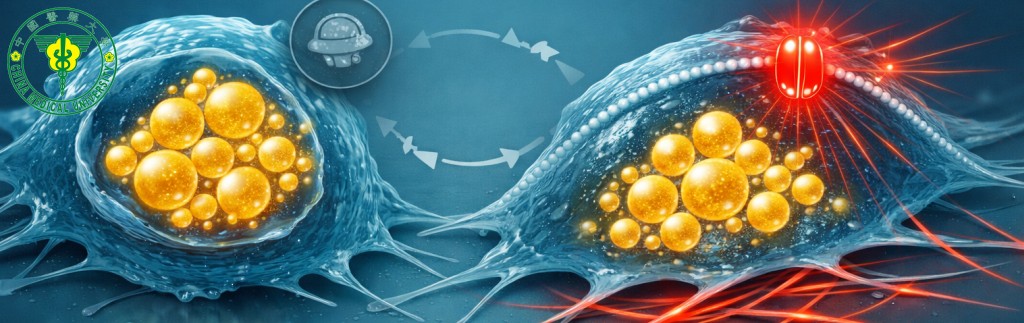
To understand the mechanism behind this accumulation, the team examined the role of PPARα, a nuclear receptor that regulates lipid metabolism. PPARα normally promotes lipophagy, the breakdown and recycling of lipids within cells. When PPARα activity was reduced, lipophagy was impaired, leading to the accumulation of ether lipids within tumor cells. Rather than being harmless byproducts, these accumulated lipids actively influenced tumor behavior.
The researchers found that elevated ether-lipids activated TRPV2 signaling pathways, which are linked to changes in the cytoskeleton, the internal framework that supports cell shape and movement. As a result, tumor cells exhibited increased mobility, a key feature of metastatic potential. In other words, metabolic imbalance was directly associated with increased tumor spread capacity.
What distinguishes this work is its integration of metabolic profiling with functional signaling analysis. Rather than viewing lipid accumulation as a secondary consequence of cancer growth, the study positions ether-lipids as active participants in tumor progression. It also identifies PPARα deficiency as a pivotal metabolic switch that enables this shift.
These findings open potential therapeutic avenues. Restoring lipid balance or targeting downstream signaling pathways such as TRPV2 could reduce metastatic behavior. As metabolic therapies gain attention in oncology, understanding specific lipid vulnerabilities becomes increasingly important.
More broadly, this research underscores that cancer is not driven solely by genetic mutations. Metabolic regulation plays a central role in shaping tumor aggressiveness. In a future in which metabolic health and cancer prevention are more closely linked, insights into lipid signaling pathways may inform both therapeutic strategies and broader approaches to liver disease management.
Reference
P.-Y. Liao et al., “Ether-lipids accumulation promotes hepatocellular carcinoma progression linked to PPARα deficiency,“ Journal of Biomedical Science, 2025, doi:10.1186/s12929-025-01178-y.

Cheng, Wei-Chung(鄭維中)
Graduate Institute of Biomedical Sciences, China Medical University, Taiwan


Ma, Wen-Lung(馬文隆)
Graduate Institute of Biomedical Sciences, China Medical University, Taiwan
Publication Title: Ether-lipids accumulation promotes hepatocellular carcinoma progression linked to PPARα deficiency
Journal Title: Journal of Biomedical Science
Publisher: BioMed Central
Year: 2025
Subject: Medicine
Research Footprints:
Liver Cancer; Metabolic health; Cancer prevention