Summary
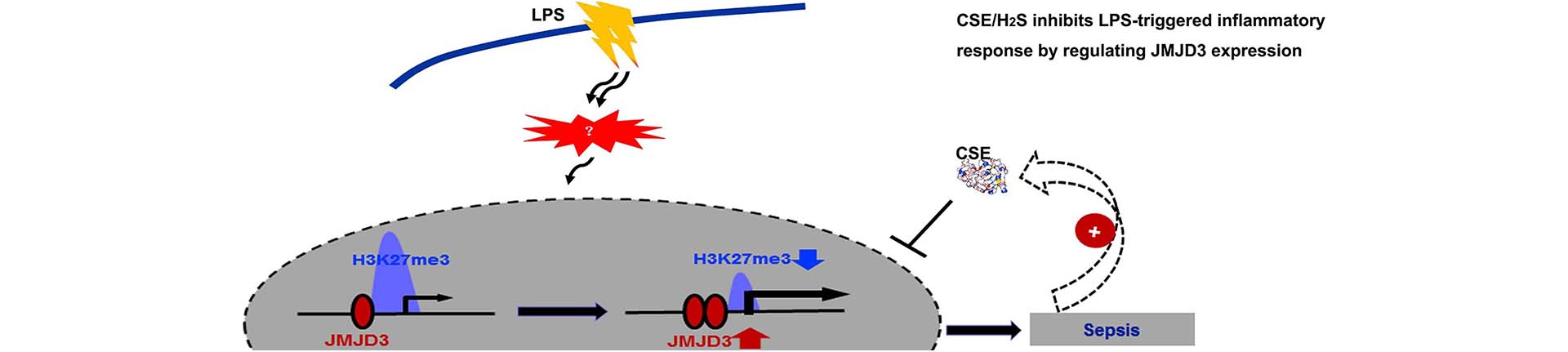
This study elucidates the mechanism by which endogenous hydrogen sulfide (H₂S), produced by the enzyme cystathionine-γ-lyase (CSE), modulates inflammatory responses via regulation of the histone demethylase JMJD3.
The The findings demonstrate that lipopolysaccharide (LPS) stimulation increases JMJD3 expression and reduces H3K27me3 histone marks in macrophages, thereby promoting inflammation. Knockdown of JMJD3 attenuated the production of pro-inflammatory mediators, whereas its overexpression exacerbated inflammatory responses, confirming JMJD3’s pro-inflammatory function. Crucially, CSE-derived H₂S suppressed JMJD3 expression and curtailed the inflammatory cascade. In a murine sepsis model, CSE deficiency resulted in aggravated inflammatory pathology, concomitant with elevated JMJD3 expression.
Collectively, these findings suggest a novel epigenetic mechanism through which H₂S constrains excessive inflammation by inhibiting JMJD3 activity.
S. Liu et al., “Endogenous hydrogen sulfide regulates histone demethylase JMJD3-mediated inflammatory response in LPS-stimulated macrophages and in a mouse model of LPS-induced septic shock,” Biochemical Pharmacology, vol. 149, pp. 153–162, Mar. 2018, doi: 10.1016/j.bcp.2017.10.010.