Summary
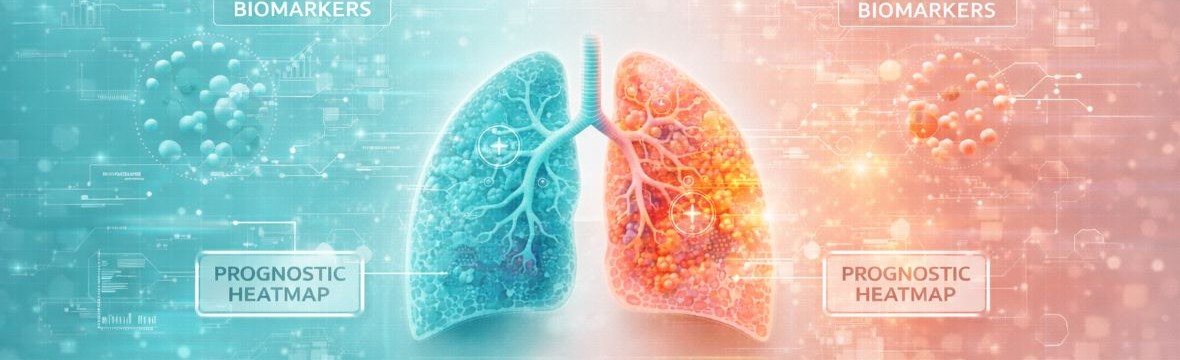
This study introduces LUCID, a multimodal artificial intelligence framework designed to infer tumor biology and predict clinical outcomes in lung cancer using routinely collected clinical data. A central target is EGFR (epidermal growth factor receptor), a gene commonly mutated in lung cancer that directly guides the use of targeted therapies. In standard practice, EGFR status is determined by tissue biopsy, which may be unavailable or insufficient in many patients.
The scientific novelty lies in demonstrating that tumor molecular characteristics can be inferred from a combination of non-invasive clinical signals rather than genetic testing alone. By integrating CT scans, patient-reported symptoms, laboratory values, and demographic information, LUCID achieved strong discrimination in predicting EGFR mutation status, with an AUROC exceeding 0.85. AUROC (Area Under the Receiver Operating Characteristic curve) reflects how well the model distinguishes between patients with and without EGFR mutations, with higher values indicating better predictive accuracy.
Beyond molecular prediction, the model showed clear prognostic value for survival and disease progression. LUCID predicted overall survival with AUCs of 0.821 at 1 year, 0.884 at 3 years, and 0.912 at 5 years, demonstrating stable long-term predictive performance. In addition, the model significantly stratified patients for progression-free survival (PFS), identifying subgroups with markedly improved outcomes; for example, 5-year PFS increased from 12.2% to 41.6% in a treatment-sensitive cohort. These results indicate that multimodal clinical data encode latent biological information relevant to tumor aggressiveness and treatment response.
The impact of this work is its demonstration that precision oncology can be advanced using existing, non-invasive clinical data. By reducing reliance on tissue biopsies and enabling accurate survival and progression prediction under real-world conditions, this approach supports earlier treatment selection, improved risk stratification, and more scalable personalized cancer care.
Y. Lu, F. Liu, Y. Yu, et al., “AI-enabled molecular phenotyping and prognostic predictions in lung cancer through multimodal clinical information integration,” Cell Reports Medicine, vol. 6, Art. no. 102216, Jul. 15, 2025, doi: 10.1016/j.xcrm.2025.102216