Summary
This research investigates why a common environmental contaminant—2,6-dichloro-1,4-benzoquinone (2,6-DCBQ), formed during drinking-water disinfection—can damage the male reproductive system. While earlier studies suggested oxidative stress as a cause, the underlying molecular mechanism remained unclear.
Using advanced LC-MS-based proteomics, the researchers show that 2,6-DCBQ covalently binds to proteins in vivo, particularly at cysteine and lysine residues. These irreversible chemical bindings alter protein structure and function, leading to measurable damage in testicular tissue and reduced reproductive health in animal models. In simple terms, the toxic chemical “sticks” to essential proteins and interferes with how they work.
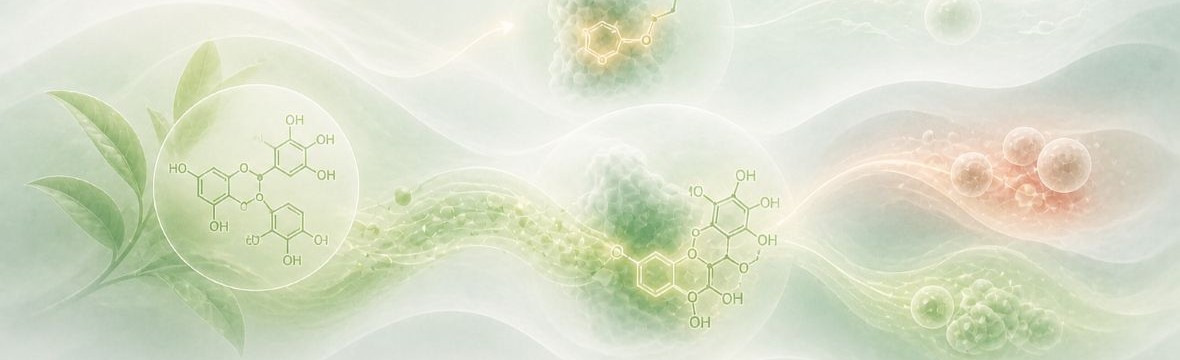
A key novelty of this study is how it explains detoxification by green tea. Instead of reversing damage after it happens, catechins from green tea compete with proteins for binding to 2,6-DCBQ. By capturing the toxin first, catechins reduce the number and variety of toxic protein adducts formed in the body, effectively lowering biological harm.
Compared with the previous research on cysteine-targeting drug screening, which focused on how to find covalent binders, this study goes a step further by showing what covalent binding actually does inside living systems—both harm (toxic protein modification) and protection (competitive interception by natural compounds). The work highlights covalent chemistry as a key mechanism linking environmental exposure, toxicity, and nutritional intervention.
The potential impact is broad. This research provides a molecular explanation for environmental reproductive toxicity and offers a science-based rationale for dietary protection, while reinforcing the importance of monitoring covalent protein modifications when assessing chemical safety.
Reference
M. Liu, Z. Ning, Y. Cheng, Z. Zheng, X. Yang, T. Zheng, N. Li, and J.-L. Wu, “The key to 2,6-dichloro-1,4-benzoquinone reproductive toxicity and green tea detoxification: Covalent binding and competitive binding,” Ecotoxicology and Environmental Safety, vol. 286, article 117239, 2024, doi: 10.1016/j.ecoenv.2024.117239.