Summary
This study addresses a central challenge in cancer immunotherapy: why patients with similar tumor characteristics often show markedly different responses to immune checkpoint inhibitors (ICIs). While existing biomarkers focus primarily on tumor-intrinsic features, such as PD-L1 expression or tumor mutation burden, this work shifts the focus toward the tumor immune microenvironment, particularly the role of macrophages.
Through a multicohort analysis spanning urothelial, hepatocellular, and head and neck cancers, the authors demonstrate that high infiltration of M1-polarized macrophages is consistently associated with improved overall survival and objective response rates following ICI treatment. These macrophages contribute to an immune-active microenvironment, characterized by elevated expression of immune checkpoint molecules and enhanced T-cell activity.
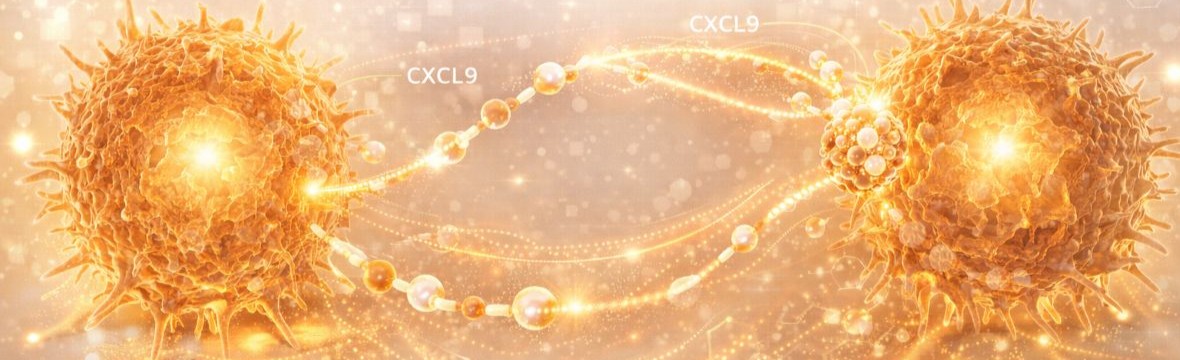
Mechanistically, the study identifies CXCL9 as the critical chemokine linking M1 macrophages to effective antitumor immunity. CXCL9 promotes the recruitment of cytotoxic T cells into the tumor, establishing an inflamed microenvironment that is permissive to immunotherapy efficacy. This M1–CXCL9 axis provides a biologically coherent explanation for treatment sensitivity, moving beyond descriptive immune signatures.
At the molecular level, the work introduces APOBEC3G as a novel biomarker connecting RNA modification processes with immune activation. Single-cell RNA sequencing reveals that APOBEC3G expression correlates with M1 macrophages, CXCL9, and T-cell infiltration, and is independently associated with better survival outcomes, highlighting a previously underappreciated layer of immunotherapy regulation.
To translate these insights into prediction, the authors develop a multi-level attention graph neural network (MLA-GNN) that integrates macrophage, chemokine, and RNA-modification features. This model achieves AUCs of 0.780–0.813, outperforming conventional biomarkers such as tumor mutation burden and PD-L1 expression. Together, these findings support a shift toward immune-microenvironment–aware, biologically interpretable models for guiding immunotherapy selection.
Y. Yu et al., “Unraveling the role of M1 macrophage and CXCL9 in predicting immune checkpoint inhibitor efficacy through multicohort analysis and single-cell RNA sequencing,” MedComm, vol. 5, p. e471, 2024, doi: 10.1002/mco2.471